Professional trauma remediation in downtown Los Angeles high-rises requires coordination with building management for elevator access, service entrance scheduling, and hallway protection. Teams establish containment to prevent cross-contamination in shared corridors, protect common areas, and use discreet unmarked equipment to maintain resident privacy throughout the process.
Why High-Rise Cleanup Requires Different Planning
Downtown Los Angeles has experienced significant residential growth over the past two decades, with high-rise apartments and condominiums now lining streets from South Park to the Arts District. These buildings — many exceeding 20 stories — create logistical challenges that simply do not exist for single-family homes.
Moving equipment through a lobby, into a service elevator, and along shared hallways requires advance planning. Building managers typically require vendor registration, proof of insurance, and scheduled access through service entrances rather than main lobbies. Teams must protect elevator interiors, cover hallway flooring, and establish containment barriers at the unit entrance — all while maintaining the privacy of the affected unit's occupants and surrounding residents.
High-rise trauma cleanup in downtown LA requires coordination with building management for elevator access, hallway protection, and loading dock scheduling — logistics that single-family home cleanups never encounter.
Access and Containment in Multi-Story Buildings
Each downtown LA high-rise has its own access protocols. Some buildings require 24-hour notice for vendor entry; others can accommodate same-day service through the building engineer. Key access considerations include:
- Service elevator scheduling: Teams coordinate with building management to reserve service elevators, protecting interiors with temporary floor and wall coverings during equipment transport
- Hallway protection: Plastic sheeting and floor runners are placed from the elevator to the unit entrance, preventing cross-contamination and protecting shared surfaces
- Loading dock coordination: Waste packaging and removal requires dock access, which may be time-restricted in busy DTLA buildings that share loading facilities with retail or commercial tenants
Contact your building management office before scheduling cleanup to understand vendor registration requirements, service elevator availability, and loading dock hours. This can prevent delays on the day of service.
Shared HVAC and Odor Migration Between Units
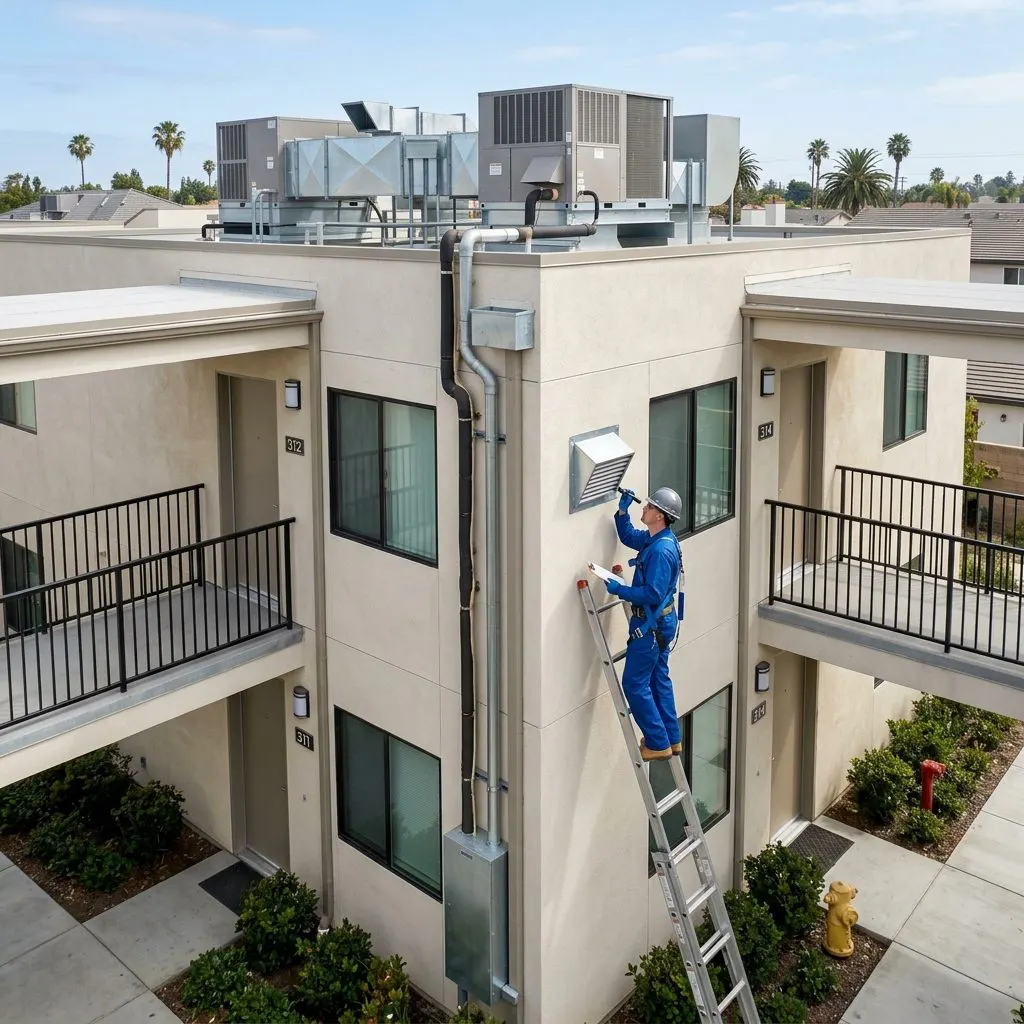
Many DTLA high-rises use centralized or shared HVAC systems. When an incident involves decomposition or significant biological contamination, odors can migrate through shared ductwork, wall cavities, and utility chases to neighboring units. Professional teams assess whether HVAC isolation is needed, seal ductwork openings in the affected unit, and may recommend building-wide air quality evaluation in severe cases. This is particularly important in older converted loft buildings in the Arts District or along Spring Street where original ventilation systems may connect multiple units.
In a building with 200 residents and shared hallways, the way equipment moves through common spaces matters as much as the work done inside the unit.
Privacy and Communication in Residential High-Rises
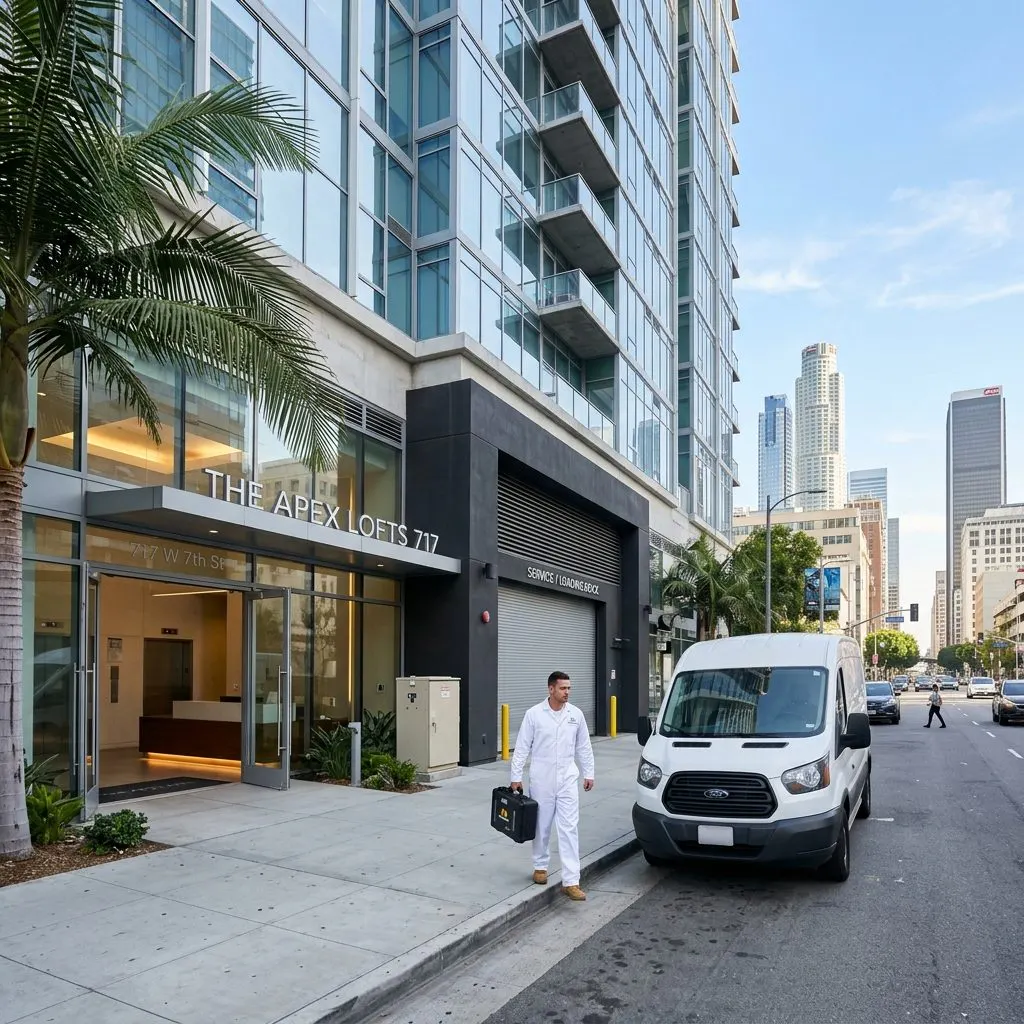
Discretion is essential in high-density residential buildings. Teams arrive in unmarked vehicles, carry equipment in sealed unmarked cases, and wear clean coveralls rather than branded uniforms during transit through common areas. Communication with building management focuses on necessary logistics without disclosing the nature of the incident to staff or residents who do not need to know.
For property managers coordinating remotely, our statewide trauma remediation team provides photo documentation, scope descriptions, and progress updates so decisions can be made without requiring an on-site visit. This is particularly valuable for out-of-state property investors who own units in downtown LA towers.
Frequently Asked Questions
Final Thoughts
High-rise trauma cleanup in downtown Los Angeles is fundamentally different from ground-level work. Every step — from entering the building to removing waste — requires coordination with building systems, management protocols, and a commitment to protecting the privacy of every resident in the building. The right remediation team understands these urban realities and plans accordingly.