
Decomposition Cleanup and Remediation in California
Specialized cleanup for properties affected by decomposition. We remove the source, address contaminated materials, and treat odor migration throughout the property.
Professional Decomposition Remediation for California Properties
Decomposition creates contamination that penetrates building materials deeply and progressively. Unlike surface-level blood contamination, decomposition fluids and byproducts migrate through multiple layers — carpet, padding, subfloor, baseboards, drywall, and even into wall cavities and structural members. The longer decomposition continues, the more extensively materials are affected.
California's climate is a significant factor. Central Valley heat, Inland Empire temperatures, and desert conditions can accelerate decomposition in closed properties. Even in cooler coastal areas, poor ventilation and sealed windows can create conditions where contamination progresses rapidly.
Odor from decomposition is particularly persistent because it originates from within building materials, not just on surfaces. Masking odor with fragrance or air fresheners does not address the source. Effective treatment requires removing contaminated materials first, then applying professional odor-treatment methods to address residual odor in materials that remain.
Source-Based Remediation
We remove contaminated materials first — the source of both contamination and odor — before applying treatment methods.
Climate-Informed Planning
We understand how California's heat, humidity, and ventilation conditions affect decomposition and plan accordingly.
Multi-Layer Material Evaluation
Every material layer is evaluated independently — from surface flooring down through subfloor and into structural elements.
HVAC and Odor Migration Assessment
We assess whether contamination or odor has entered HVAC systems, shared walls, or adjacent spaces.
When Decomposition Cleanup Is Needed
Any property where decomposition has occurred requires professional evaluation to determine the extent of material contamination and odor migration.
Extended Decomposition in a Closed Property
Properties that remained sealed during warm weather may have contamination that has penetrated multiple building material layers.
Odor That Persists After Surface Cleaning
If decomposition odor continues after surface-level cleaning, contaminated porous materials below the surface are likely the source.
HVAC-Connected Odor Migration
Decomposition odor can enter HVAC ductwork and distribute throughout the property or into adjacent units in multi-unit buildings.
Vacant Properties Requiring Sale or Re-Occupancy
Properties that need to be sold, rented, or reoccupied after a decomposition event require thorough remediation and documentation.
Our Decomposition Cleanup Process
Systematic source removal, decontamination, and odor treatment.
Comprehensive Assessment
We evaluate every material layer, trace contamination migration paths, check HVAC systems for odor distribution, and assess wall cavities and subfloor conditions.
Containment and Source Material Removal
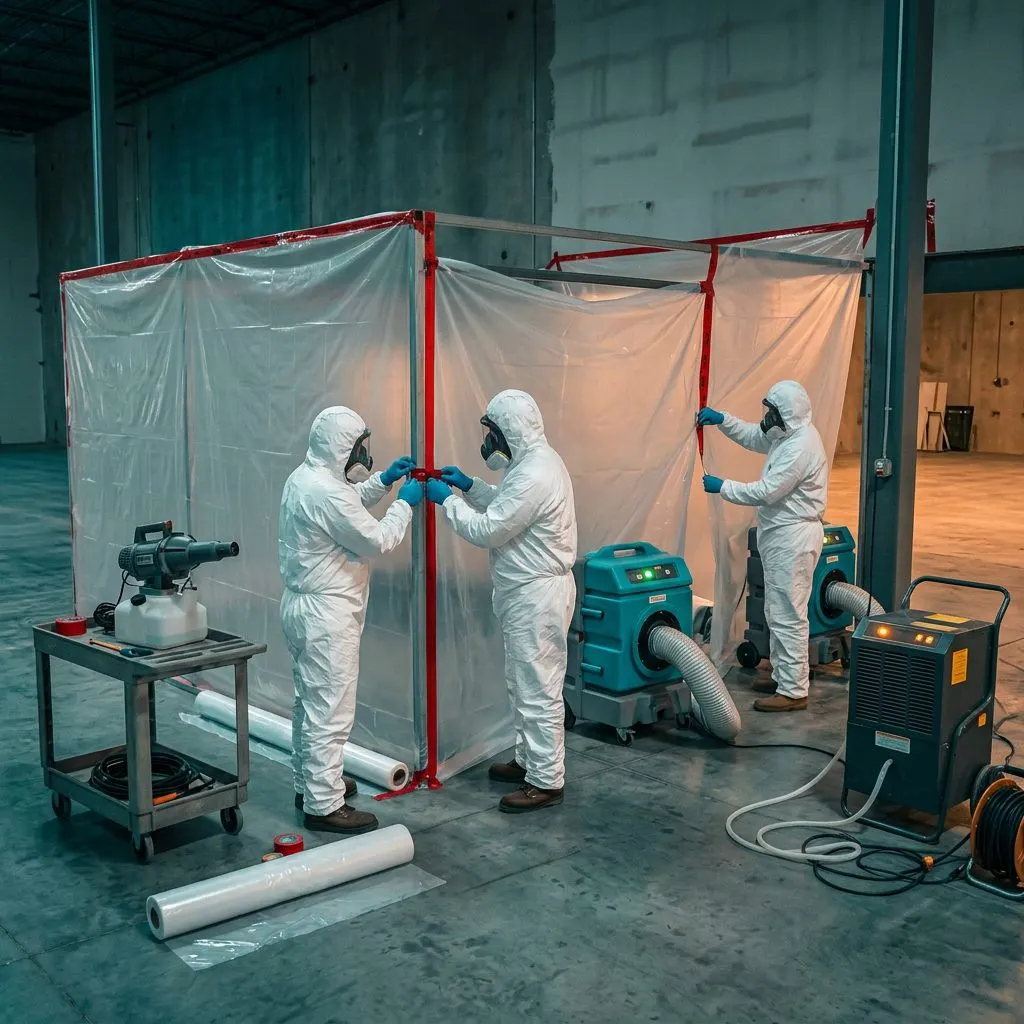
The work area is contained. Heavily contaminated materials — carpet, padding, subfloor sections, drywall, baseboards, furniture — are carefully removed and packaged.
Decontamination and Cleaning
Remaining surfaces are cleaned with EPA-registered disinfectants. Structural elements that cannot be removed are treated in place.
Professional Odor Treatment
After source removal, hydroxyl generators, thermal fogging, and HEPA filtration address residual odor in remaining materials. Treatment time depends on the extent of prior contamination.
Frequently Asked Questions About Decomposition Cleanup
If odor originates from within porous materials — carpet, padding, subfloor, drywall — those materials typically need to be removed first. Odor treatment methods alone cannot address contamination trapped inside building materials.
Decomposition fluids can penetrate through carpet and padding into subfloor, soak through drywall into wall cavities, and travel along baseboards into adjacent areas. The depth depends on duration, temperature, and material porosity.
Yes. In properties with central heating or air conditioning, odor can enter ductwork and distribute to other rooms or — in multi-unit buildings — to adjacent units. HVAC assessment is part of our evaluation.
Duration depends on the extent of contamination, the materials affected, and the property size. Small single-room situations may take one day. Extensive contamination across multiple rooms may require several days including odor treatment time.
Request a Decomposition Cleanup Assessment
Our team can evaluate the property, determine the extent of contamination and odor migration, and explain the scope of remediation needed. Available for California residential and commercial properties.
(888) 909-5127