Decomposition Odor Removal for California Properties
Advanced odor remediation that starts with source removal — not fragrance masking. We address decomposition odor in homes, apartments, and commercial properties using professional treatment methods.
Why Decomposition Odor Requires More Than Air Fresheners
Decomposition odor is among the most persistent and difficult property odors to resolve because it originates from within building materials, not just on surfaces. Air fresheners, scented candles, and consumer odor sprays mask the smell temporarily but cannot address contamination trapped inside carpet, padding, subfloor, drywall, baseboards, and wall cavities.
Effective decomposition odor treatment in California properties follows a specific sequence: first, remove the source materials; then, apply professional treatment methods to address residual odor in materials that remain. Skipping the source-removal step and proceeding directly to odor treatment typically produces temporary results — the odor returns because the contaminated materials remain in place.
California's climate adds complexity to odor remediation. Inland Empire and Central Valley heat can intensify odor. Coastal humidity can slow the drying of treated materials. Older California housing stock with limited insulation and aging ductwork can allow odor to migrate into unexpected areas. Multi-unit buildings with shared HVAC systems can distribute odor to adjacent units.
Source Removal First
Odor treatment begins by removing the contaminated materials that are generating the odor — not by covering the smell.
Professional Treatment Methods
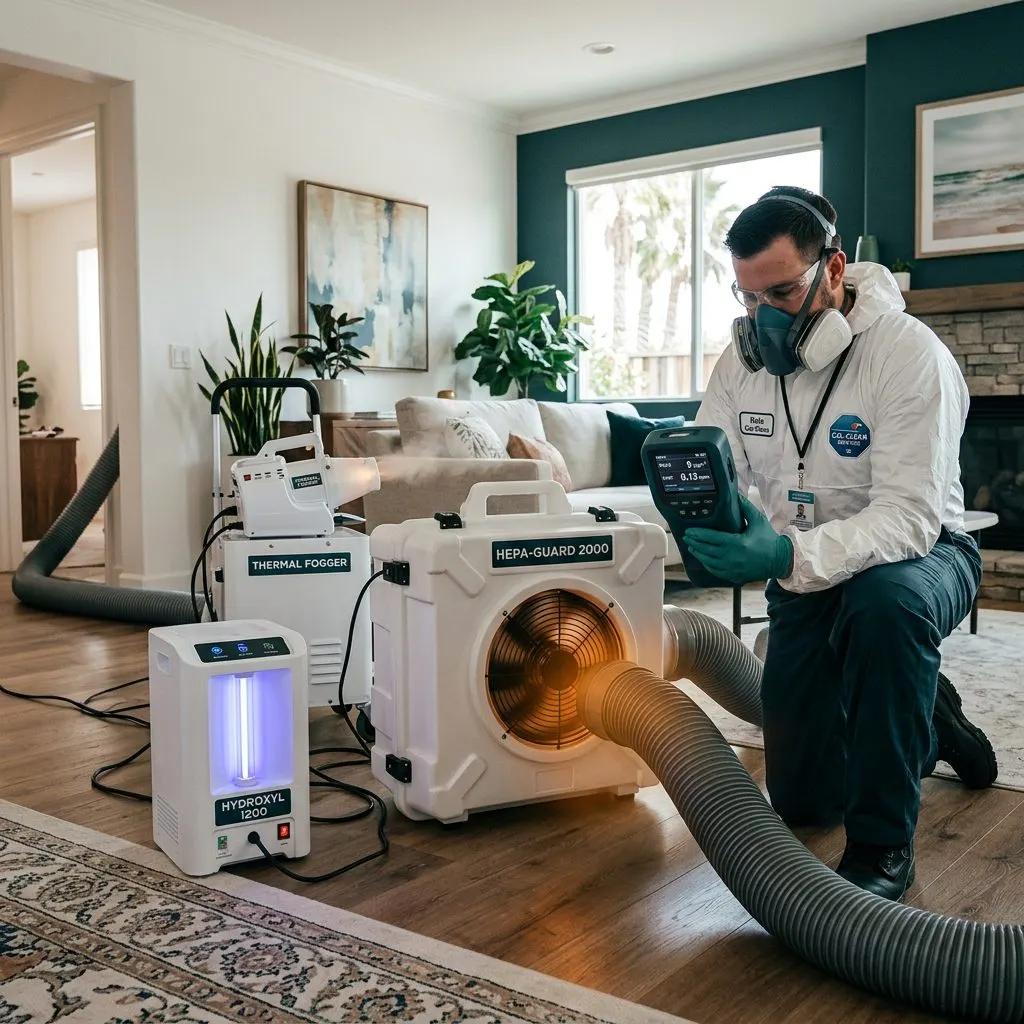
Hydroxyl generators, thermal fogging, and HEPA air filtration address residual odor in remaining materials.
HVAC and Migration Assessment
We check ductwork, shared walls, and adjacent spaces for odor distribution before treatment.
Climate-Aware Approach
Treatment plans account for California's heat, humidity, and ventilation conditions that affect odor persistence.
When Professional Decomposition Odor Removal Is Needed
Professional odor treatment is necessary when decomposition odor persists after surface cleaning or when the source has not been fully identified and removed.
Odor Persists After Surface Cleaning
If decomposition odor continues after cleaning visible surfaces, contaminated porous materials beneath the surface are likely the ongoing source.
Odor Has Spread Through HVAC Systems
When odor appears in rooms distant from the original source, HVAC distribution may be carrying it through ductwork to other areas.
Multi-Unit Properties With Neighbor Complaints
Apartments and condominiums where odor has migrated to adjacent units through shared walls, floors, or ventilation systems.
Properties Preparing for Sale or New Tenancy
Landlords, estate representatives, and property managers need thorough odor resolution before a property can be listed, shown, or re-occupied.
Our Decomposition Odor Removal Process
A source-first approach that addresses the cause of the odor, not just the symptom.
Odor Source Identification
We trace the odor to its source — identifying which materials are generating it, how far contamination has spread, and whether HVAC systems are distributing the odor.
Source Material Removal
Contaminated porous materials — carpet, padding, subfloor sections, drywall, baseboards — are removed and packaged. This eliminates the primary odor source.
Professional Odor Treatment
After source removal, hydroxyl generators break down odor molecules in remaining materials. Thermal fogging reaches into wall cavities and ductwork. HEPA filtration captures airborne particles.
Verification and Follow-Up Assessment
The property is assessed after treatment to confirm odor reduction. In some cases, additional treatment cycles may be needed depending on the depth of prior contamination.
Frequently Asked Questions About Decomposition Odor Removal
It depends on where the odor originates. If contaminated porous materials are the source, they typically need to be removed. Odor treatment methods alone generally cannot eliminate odor trapped inside carpet padding, subfloor, or drywall.
Hydroxyl generators produce hydroxyl radicals — reactive molecules that break down odor compounds at the molecular level. Unlike ozone generators, hydroxyl generators can operate safely in occupied spaces and do not require evacuation.
After source materials are removed, professional odor treatment typically runs for 24 to 72 hours depending on the extent of odor penetration. Severe cases may require additional treatment cycles.
Yes. Central HVAC systems can distribute odor throughout a property or into adjacent units in multi-unit buildings. Duct cleaning or treatment may be part of the remediation plan.
Request a Decomposition Odor Assessment
Our team can identify the odor source, assess migration paths, and explain the treatment approach. Available for California homes, apartments, commercial properties, and multi-unit buildings.
(888) 909-5127