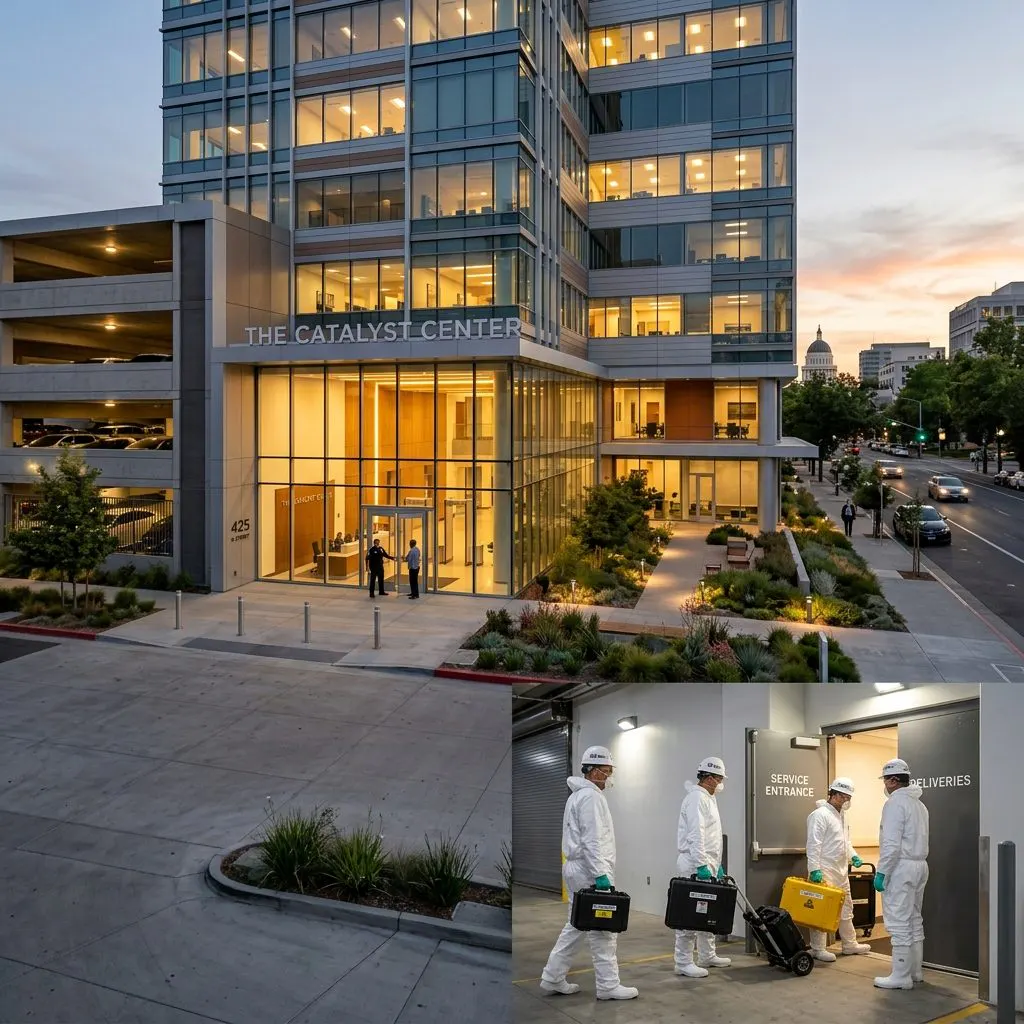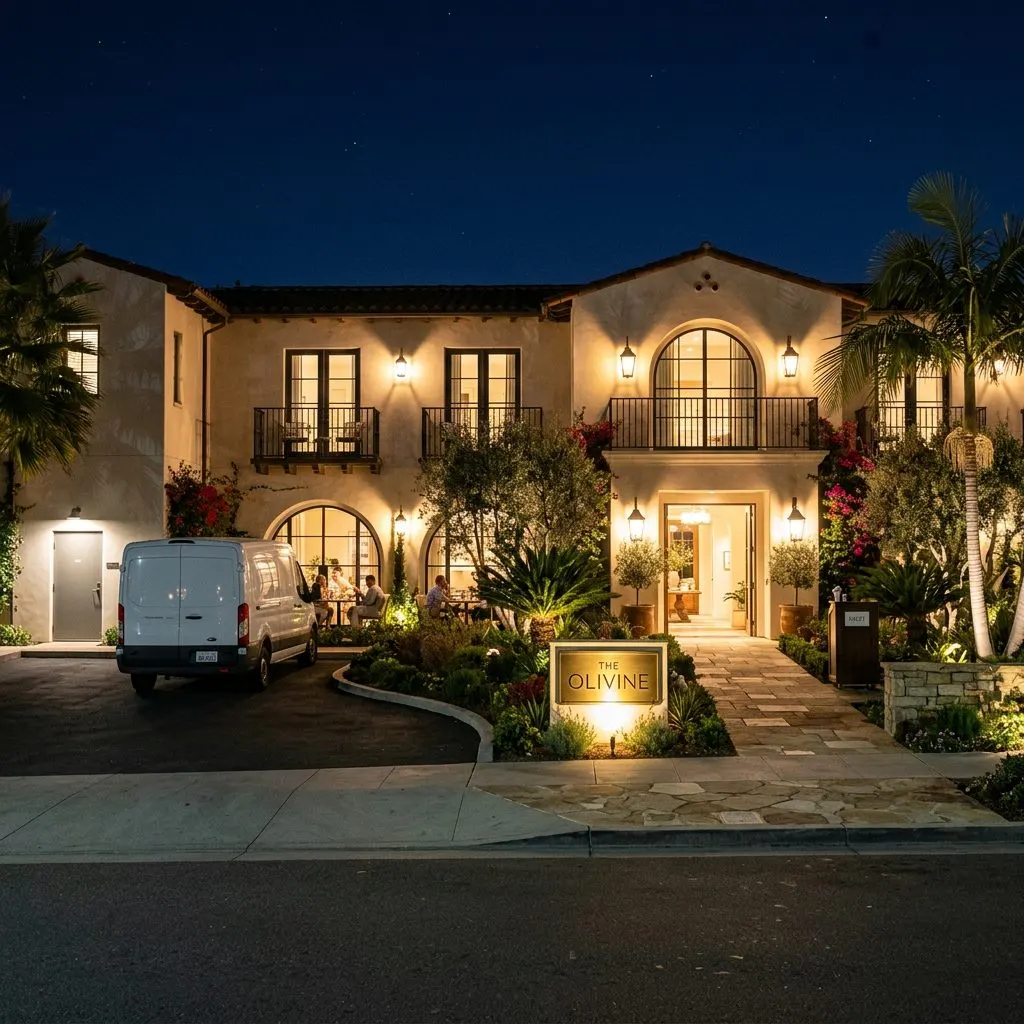
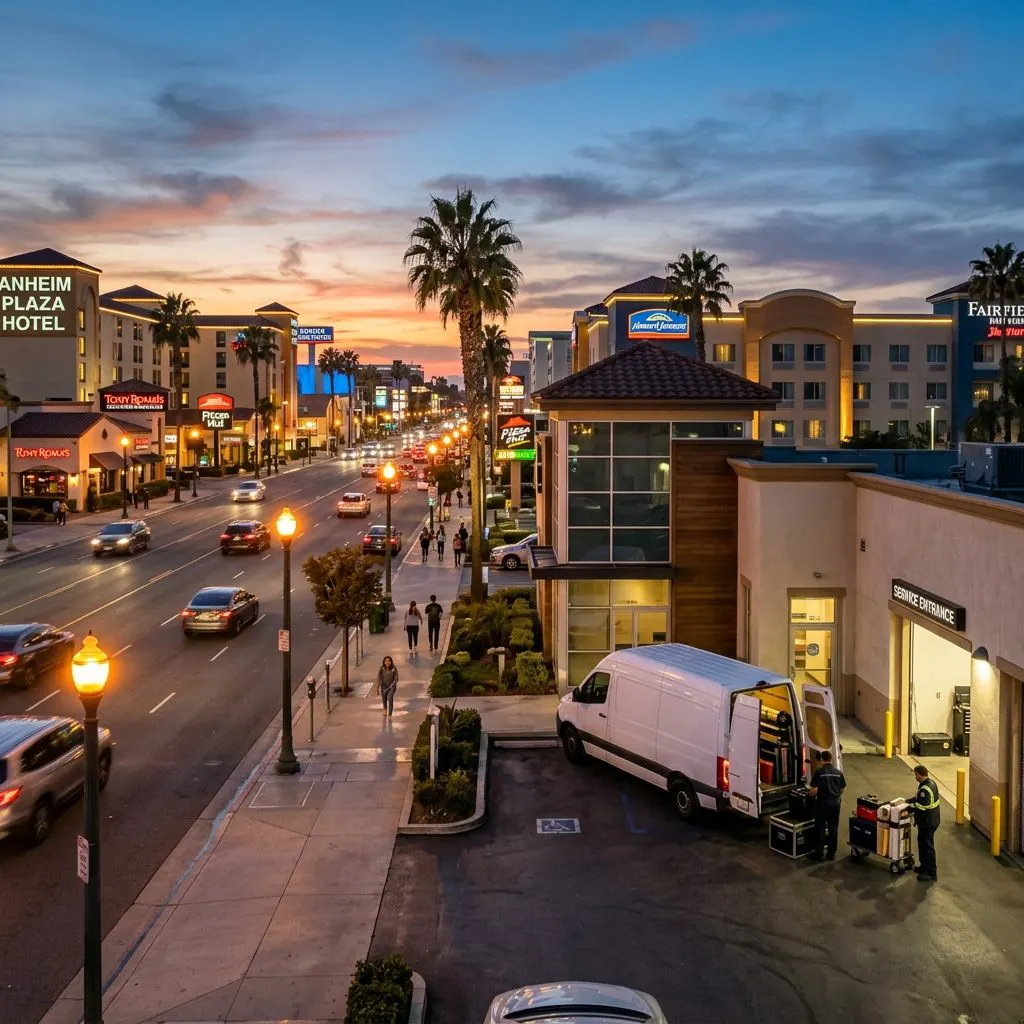
After-hours trauma remediation for Anaheim commercial properties involves coordinating with facility managers to schedule cleanup during closed or low-occupancy periods, isolating affected areas from guest and employee access, using service entrances and freight elevators, and completing work before business reopening. Hotels may require room blocking and corridor isolation; restaurants need kitchen and dining area separation; retail properties need stockroom and sales floor containment.
Why Anaheim Commercial Properties Need After-Hours Service
Anaheim's commercial landscape revolves around hospitality and tourism. The Anaheim Resort District — home to major theme parks, convention centers, and dozens of hotels — operates nearly around the clock. Hotels along Harbor Boulevard and Katella Avenue have guests arriving and departing at all hours. Restaurants in the Anaheim Packing District, CtrCity, and along Ball Road serve lunch and dinner crowds daily. Retail centers throughout the city maintain regular business hours that leave narrow windows for sensitive service work.
When a traumatic incident affects one of these properties, the business owner or facility manager must balance two priorities: thorough remediation and minimal business disruption. After-hours cleanup — scheduled during the quietest operational period — addresses both. The work happens when guest and customer traffic is at its lowest, and the property is ready for normal operations when doors open.
Anaheim commercial properties need remediation teams who understand hospitality operations — room blocking, service corridor access, food-safety containment, and guest privacy are all part of the service, not afterthoughts.
Hotel Room Isolation and Guest Privacy
Hotel cleanup requires specific protocols that differ significantly from residential remediation. Key considerations include:
- Room blocking: The affected room and potentially adjacent rooms must be taken out of service. The remediation team coordinates with the front desk or revenue management to ensure these rooms are not assigned during cleanup
- Corridor isolation: Temporary barriers or signage in the hallway prevent guest access to the work area without revealing the nature of the service. "Maintenance in progress" barriers are typically sufficient
- Service entrance access: All equipment and waste enters and exits through service corridors, freight elevators, and back-of-house routes — never through the lobby or main guest areas
Brief your night manager or security supervisor about the scheduled remediation window, service entrance access requirements, and the areas that will be restricted. This prevents confusion during the overnight work period.
Restaurant and Food-Service Considerations
Restaurant cleanup adds food-safety dimensions that hotel and retail situations do not typically involve. If the affected area is near a kitchen, food preparation, or food storage zone, containment must be absolute. Cross-contamination between the remediation area and food-contact surfaces is unacceptable. The remediation team establishes barriers that isolate the work zone from any area where food is prepared, stored, or served. Our confidential cleanup assistance for California properties includes the specialized containment protocols that food-service environments require.
In the hospitality industry, a hotel room or restaurant dining area must be welcoming when guests arrive. After-hours remediation exists to ensure that the difficult work is complete before the first guest of the day walks through the door.
Staff Communication and Business Continuity
Commercial property managers in Anaheim must decide how much to communicate to staff about the remediation. In most cases, employees do not need to know the specific nature of the incident — only that professional service is being performed and that certain areas are temporarily restricted.
Business continuity planning should include: identifying which operational areas remain open during remediation, scheduling staff shifts around the affected zone, preparing customer communication if delays or closures are necessary, and coordinating with the remediation team on a realistic timeline for returning the affected area to service. For comprehensive discreet trauma scene cleaning, our teams work within your operational schedule to minimize disruption.
Frequently Asked Questions
Final Thoughts
Anaheim's commercial properties serve millions of visitors and local residents annually. When a traumatic incident disrupts a hotel, restaurant, or retail property, after-hours remediation provides a path back to normal operations with minimal business disruption and maximum privacy. The right remediation team treats your business continuity as seriously as the cleanup itself.